
SMILE Eye Surgery
Serving Sunset Park, Brooklyn | Flushing and Long Island City, Queens
SMILE has grown into one of the most widely performed laser vision correction procedures worldwide since its FDA approval, offering an alternative to LASIK that does not require creating a corneal flap. At NY Partners Ophthalmology, Sophia Siu, MD, and our board-certified surgical team evaluate each patient individually to determine whether SMILE is the right path toward clearer vision.
What is SMILE?
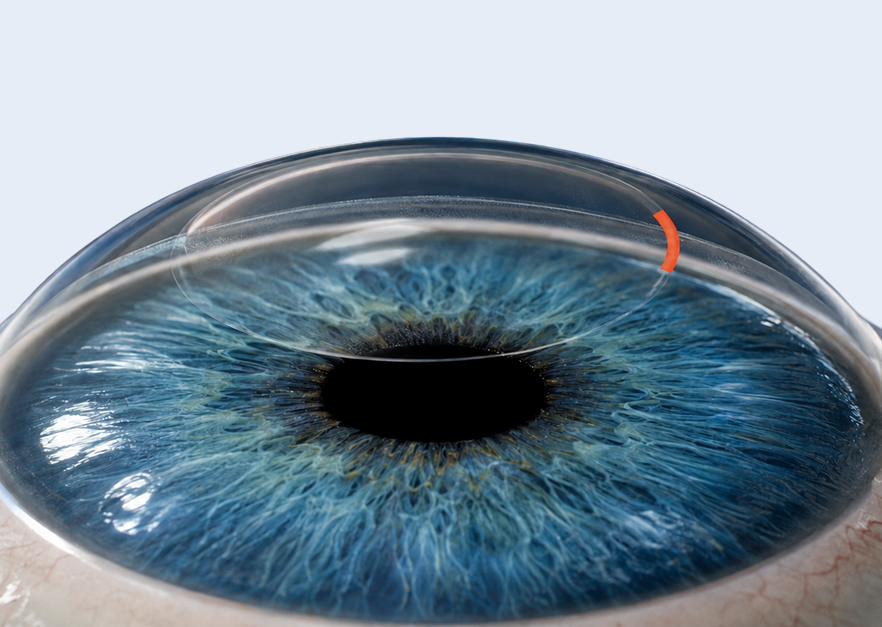
SMILE (Small Incision Lenticule Extraction) is a minimally invasive procedure that corrects nearsightedness (myopia) and myopic astigmatism. Unlike LASIK, which uses two lasers and requires lifting a corneal flap, SMILE uses a single femtosecond laser to create a small, precisely shaped piece of tissue, called a lenticule, within the cornea. Your surgeon removes this lenticule through a tiny incision just a few millimeters wide, reshaping the cornea to correct your prescription without ever creating a flap.
How SMILE Works
During the procedure, the femtosecond laser works beneath the corneal surface to outline the lenticule and a small side incision. Your surgeon then gently separates and removes the lenticule through that opening. Because no flap is created, the outer corneal layer stays largely intact, which helps preserve the cornea's natural structural strength and reduces disruption to the corneal nerves. The procedure typically takes just a few minutes per eye, and numbing drops keep the experience comfortable throughout.
SMILE Candidacy
SMILE is approved to treat a specific range of prescriptions. Good candidates generally meet the following criteria:
Age:
At least 22 years old
Prescription range:
Myopia within the FDA-approved treatment range, with or without astigmatism
Corneal thickness:
Sufficient corneal tissue to safely support lenticule removal
Eye health:
Free from active eye disease, infection, or keratoconus
General health:
No significant change in glasses or contact lens prescription for at least one year
Not pregnant or breastfeeding:
Hormonal changes can affect corneal shape and prescription stability
During your consultation at NY Partners Ophthalmology, your provider will use corneal topography, pachymetry, and a full refractive evaluation to confirm whether SMILE is an appropriate option for your eyes.
SMILE Benefits
No corneal flap, which may lower the risk of flap-related complications
Uses only one laser throughout the procedure
May help preserve corneal biomechanical stability compared to flap-based procedures
Smaller incision than traditional LASIK
Fewer corneal nerves disrupted, which some patients find reduces dry eye symptoms after surgery
Designed to correct myopia and myopic astigmatism within FDA-approved parameters
SMILE vs. LASIK
SMILE
LASIK
Corneal flap
No
Yes
Number of lasers used
One
Two
Incision size
Small, a few millimeters
Larger, flap-sized
Best for
Myopia and myopic astigmatism within approved range
Myopia, hyperopia, and astigmatism
Dry eye considerations
May involve less disruption
to corneal nerves
Flap creation may temporarily affect corneal sensation

SMILE Benefits
Most patients notice improved vision within a day or two, with continued stabilization over the following weeks. Because there is no flap to reposition, some patients find the early healing process more comfortable compared to flap-based procedures. Your surgeon will schedule follow-up visits to monitor healing and confirm your vision is progressing as expected. Avoid rubbing your eyes, swimming, and wearing eye makeup during the initial recovery period per your surgeon's instructions.
Request an Appointment